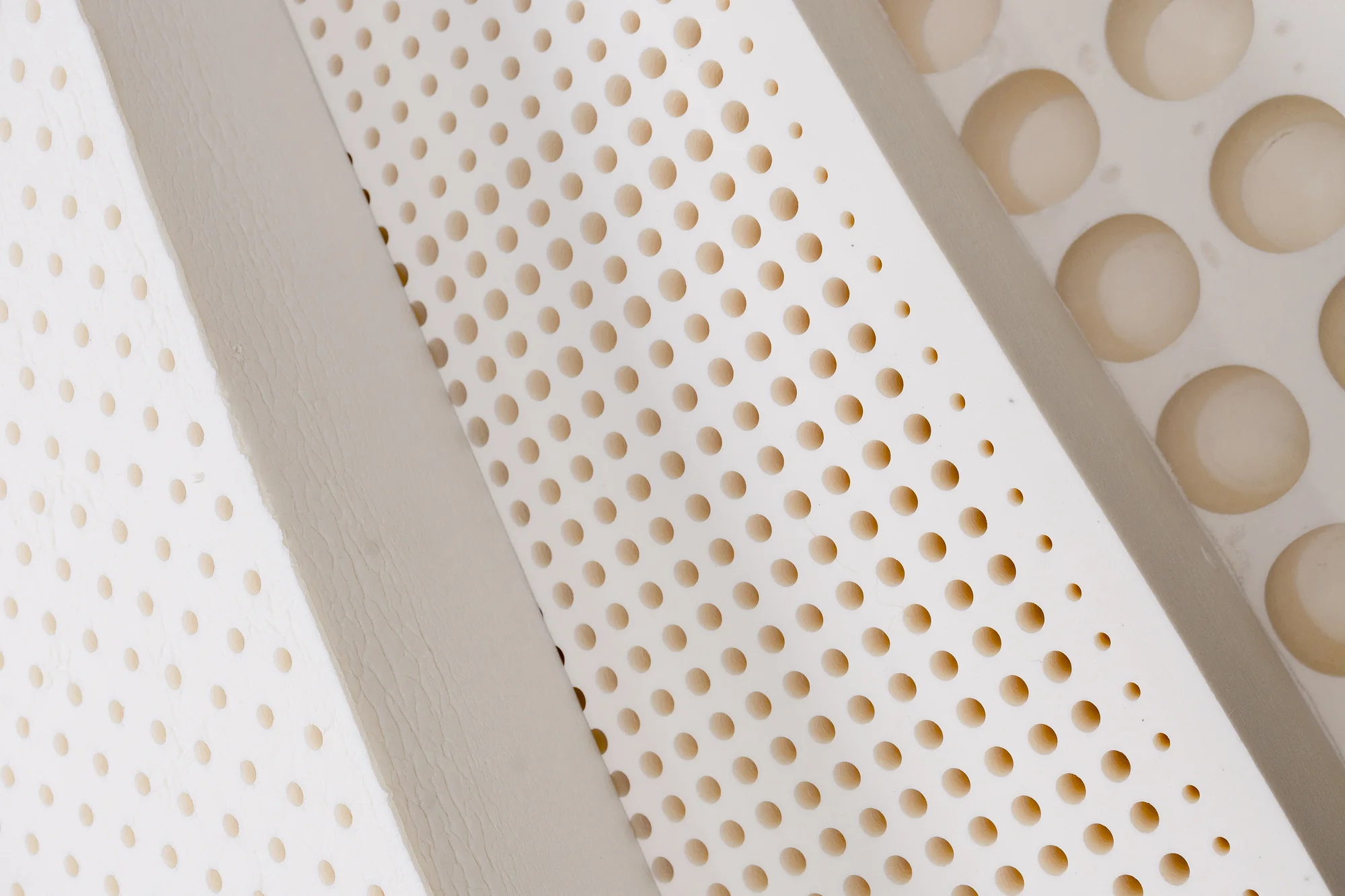
When a spec sheet says “latex,” it can mean several different materials with different origins and different production costs. For a mattress brand or manufacturer building a bill of materials, understanding which type of latex you are actually sourcing matters as much as the firmness or thickness you order. Here is a straightforward look at the three categories buyers typically run into: natural, synthetic, and blended latex.
Natural Latex
Natural latex starts as a liquid sap tapped from rubber trees. That raw material is compounded and foamed, then set into shape using a curing process such as Dunlop, which involves pouring the foamed latex into a mold and vulcanizing it into a finished block, sheet, or core. Because the base material is plant-derived rather than manufactured from petroleum feedstocks, natural latex has a distinct cell structure and a springy, responsive feel that buyers often specify by name on a product label.
From a sourcing standpoint, natural latex tends to command a higher price than fully synthetic alternatives, largely because the raw material itself is agricultural rather than industrial, and supply can shift with crop yields and processing capacity. In exchange, buyers get a foam with a long track record in bedding and cushioning applications, and a material story that resonates with shoppers looking for plant-based components.
Synthetic Latex
Synthetic latex is manufactured using petroleum-based polymers, most commonly styrene-butadiene rubber, engineered to replicate the springy feel of natural latex foam without using any natural rubber sap. Because it is produced in a controlled industrial process rather than sourced from an agricultural crop, synthetic latex can offer more predictable input costs and consistent availability.
The tradeoff is durability and feel. Synthetic latex foam generally does not hold its shape or resilience over repeated compression as well as natural latex, and many buyers and end users can tell the difference in how it responds to pressure. For manufacturers building an entry-level product line where cost control is the top priority, synthetic latex can be a reasonable option, but it should be labeled accurately so buyers down the chain know exactly what they are purchasing.
Blended Latex
Blended latex sits between the two, combining natural and synthetic latex in a single formulation. The ratio varies significantly from one supplier to the next, and a “blend” can mean anything from a small percentage of synthetic material added to mostly natural latex, to the reverse, where natural latex makes up only a minor share of the mix. Blending is typically done to reduce material cost compared to fully natural latex while retaining more of its performance than a fully synthetic foam would offer.
The challenge for buyers is that “blended latex” on its own does not tell you much. Two products both labeled as blended latex can perform quite differently depending on the actual ratio used. If you are sourcing blended latex, it is worth asking your supplier directly for the natural content percentage in writing, rather than relying on the general term.
What This Means for Your Sourcing Decisions
For a mattress brand or manufacturer, the practical questions to ask any latex supplier are simple:
- Is this natural, synthetic, or blended latex, and if blended, what is the natural content percentage?
- Which curing process was used, and what does that mean for density and firmness?
- Can the supplier provide consistent specifications, batch after batch, so your finished product performs the same way each time?
These questions matter because the answers affect how your finished product feels, how it holds up over years of regular use, and how you can accurately describe it to your own customers. A clear answer on material composition also protects you from labeling issues down the line, since buyers and retailers increasingly expect accurate claims about what a mattress or cushion component is actually made of.
Where We Fit In
We supply Dunlop natural latex exclusively, in every ILD, thickness, and size a mattress core, topper, layer, block, or pillow build might call for, including custom specifications and cuts on request. Because we work in one material category rather than switching between natural, synthetic, and blended formulations, you get consistent specifications from one production run to the next, which makes it easier to plan a product line and describe it accurately to your own customers.
If you are evaluating latex options for an upcoming product, the best way to compare them is side by side. Request a free sample kit of our natural latex and see how it performs against whatever you are currently sourcing.
Ready to compare for yourself? Request a Free Sample and evaluate our natural latex before you place your next order.